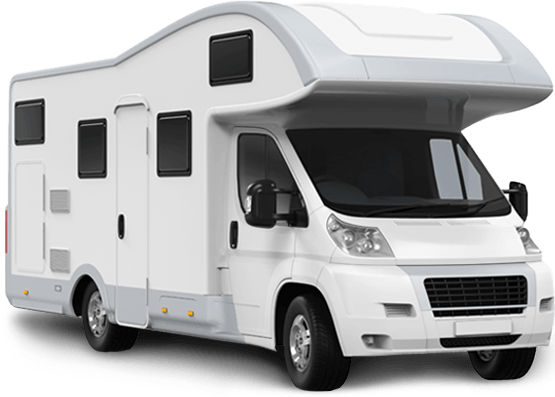
Types of Campervans Available
The differences between campervans, motorhomes and 4WD campers, including their beds, bathrooms, air-conditioning and transmissions.
Hire vehicles are often all called campervans, but each one is more specifically a campervan, a motorhome or a 4-wheel drive (4WD) camper.
In North America, the popular term for motorised camping vehicles is recreational vehicle (RV). It can refer to a campervan, motorhome or 4WD camper.
There are exceptions, but these rule-of-thumb definitions are a useful guide:
Campervans
A campervan is typically a compact, van-style vehicle, and it may come in many different shapes and sizes. Depending on its size, a campervan can accommodate 2 adults comfortably, 2 adults + 1 child, or up to 4 adults in some Hi-Top models.


Most campervans come with a gas cooker, fridge, microwave, sink and clean cold water, along with bedding for each guest.
Some campervan models have a toilet and shower, hot and cold water and reverse-cycle central-cabin air-conditioning. Many of these also have an entertainment screen or TV. The central-cabin air-conditioning is great for hot summer days and cold winter nights, but the cooling or heating is available while you’re plugged in to a powered site.
You'll see some vans described as self-contained. That doesn't always mean a fixed toilet and shower: some vans come with a portable toilet, and some have an outdoor shower only. The bathroom details for each van show what it has.
Campervans without central-cabin air-conditioning only have air-conditioning from the driver’s dashboard, and only while the engine is running.
The 2 berth campervan has a double bed that converts into your dining table and seating area. The 2+1 berth campervan has a double bed and a single bed. The 3rd seat, behind the driver’s seat, converts into the single bed. This single bed is shorter and suits a child or younger teenager.
The 4 berth Hi-Top campervan has a double bed at cabin floor level and a 2nd double bed in the loft above it. You climb a small ladder to reach the upper bed.


Most campervans have automatic transmission, but some older models may have manual transmission. Look for the ‘A’ automatic icon and the ‘M’ manual icon in the vehicle description. You can compare 2 and 3-berth campervans from different suppliers to check transmission, fridge size and other features.
Motorhomes
Motorhomes are designed to be spacious and offer the comforts of home. They’re built on a long wheelbase, so they’re larger and have more room inside. They have walk-through access from the driver’s cabin into the main cabin area, and a higher roof for plenty of headroom.


Motorhomes have a toilet and shower, reverse-cycle central-cabin air-conditioning and heating, and hot and cold water. Most also have an entertainment screen or TV, and some have a DVD player.
Your motorhome comes fully equipped with bedding (sheets, doonas/duvets or blankets, pillows, and pillowcases), towels and kitchen equipment (cutlery, crockery, cooking utensils and cooking appliances). Some camper brands may also provide outdoor chairs and a picnic table. The 4-berth motorhome has 2 double beds, with one bed in the main cabin area. In most models the 2nd bed is in the loft above the driver's cabin, and in a few it's a drop-down bed above the living area. A ladder is provided to climb up to it.
The 6-berth motorhome has 3 double beds, with 2 in the main cabin area and the 3rd in the loft above the driver's cabin.
All motorhomes in Australia have automatic transmission. Look for the ‘A’ automatic icon in the vehicle description. Features like fridge capacity, bed layout and air-conditioning vary — compare 4-berth and 6-berth campervans to see how they differ across suppliers.
4WD campers
4WD campers are generally diesel 4WD vehicles built on a Toyota Hilux chassis or a Toyota Land Cruiser model. They’re designed and built for campervan travellers and can take you off-road, where the rental company allows it.
2 berth 4WD models let you sleep inside the vehicle in a double bed. They also have an inside dining table, a collapsible sink, and a fridge and freezer.


Some 4WD camper companies may accommodate 5 travellers. There’s limited space inside the vehicle, so these campers come with extra equipment: either a rooftop tent or a ground tent, plus sleeping bags and self-inflating air mattresses.


4WD campers come with automatic or manual transmission, depending on the model you choose. Look for the ‘A’ automatic icon and the ‘M’ manual icon in the vehicle description. Sleeping configurations, storage and off-road capability differ between models — compare 4WD camper options across suppliers before you book.
Next steps
- Features to consider when choosing a campervan: seats, fridge size, child-seat anchor points and vehicle age
- Road restrictions: where 2WD and 4WD campervans can go
- Search and compare campervans for your travel dates
Part of Before You Book in the Campervan Hire Handbook.