Beyond the Postcard: Surprising Ways to Experience Uluru
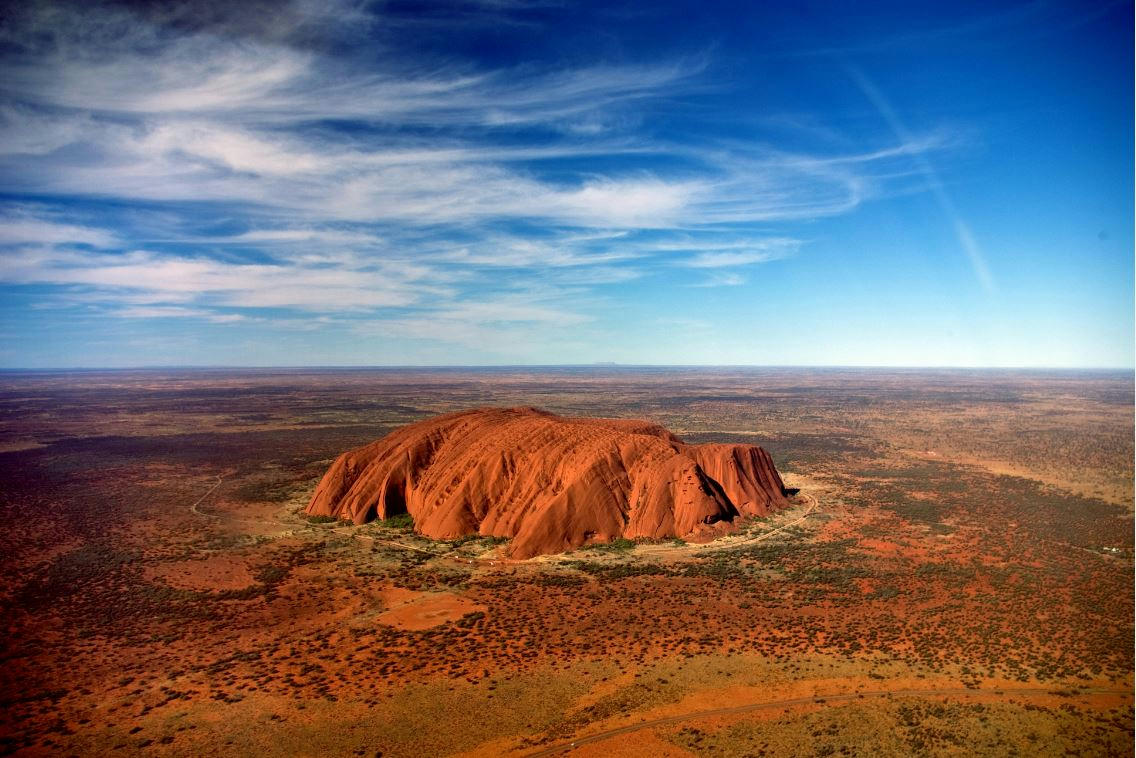
Most people arrive at Uluru, stand at the viewing area, take the photo, and leave thinking they've seen it. They haven't — not really. The rock changes completely depending on where you are, what time it is, and how close you get. There are ancient stories etched into its walls, a permanent waterhole hidden at its base, and 10 kilometres of walking track that most visitors never touch.
After you have picked your motorhome up in Alice Springs and made your way to Uluru, here's how to get more out of Australia's most iconic landmark than a sunrise silhouette from the car park.
1. Walk the Base — But Do It in Sections
The full base walk circles all 10.6 km of Uluru at ground level, and it's one of the great walks in Australia. Most visitors skip it because it sounds like a lot — but it doesn't have to be done in one go. Two shorter walks give you the best of it without the full commitment.
- The Mala Walk (2 km return, ~1.5 hours) — starts at the Mala carpark on the north-west side. A free ranger-guided walk runs daily and covers Anangu rock art, creation stories, and the traditional lifestyle of the Mala (rufous hare-wallaby) people. Ends at the beautifully shaded Kantju Gorge. Wheelchair accessible.
- The Kuniya Walk to Mutitjulu Waterhole (1 km return, 45 mins) — this short walk on the southern side leads to a permanent waterhole that has sustained Anangu people for thousands of years. Rock art lines the walls, ghost gums overhang the water, and finches dart around in the cool shade. It's unexpectedly lush — nothing like the desert surrounding it. This is the waterhole linked to the Kuniya creation story, the battle between the python and the venomous snake. One of the most quietly extraordinary spots at Uluru.
💡 Tip: Go early. Both walks are best before 9am when the light on the rock is softest and temperatures are manageable. In summer (November–March), the park closes some areas when temperatures exceed 36°C.
2. Circumnavigate the Rock by Segway
The full 10 km base circuit on foot takes a committed 3–4 hours. On a Segway, the same distance becomes an exhilarating hour of gliding across the desert floor — close enough to see the caves, rock art, and changing textures of the rock, but with enough energy left to actually enjoy the rest of your day.
Uluru Segway Tours run small guided groups (maximum 10 per guide) around the base, with commentary on Anangu culture, geology, flora, and fauna throughout. The flagship experience is the Uluru Sunrise & Segway — an early pickup, sunrise viewing, picnic breakfast, then a full circumnavigation of the rock as the desert wakes up around you. For a sunset version, the Uluru's Best & Segway at Sunset combines a scenic Segway tour with the Mutitjulu waterhole walk, the Mala walk, and a glass of sparkling wine as the sky turns red.
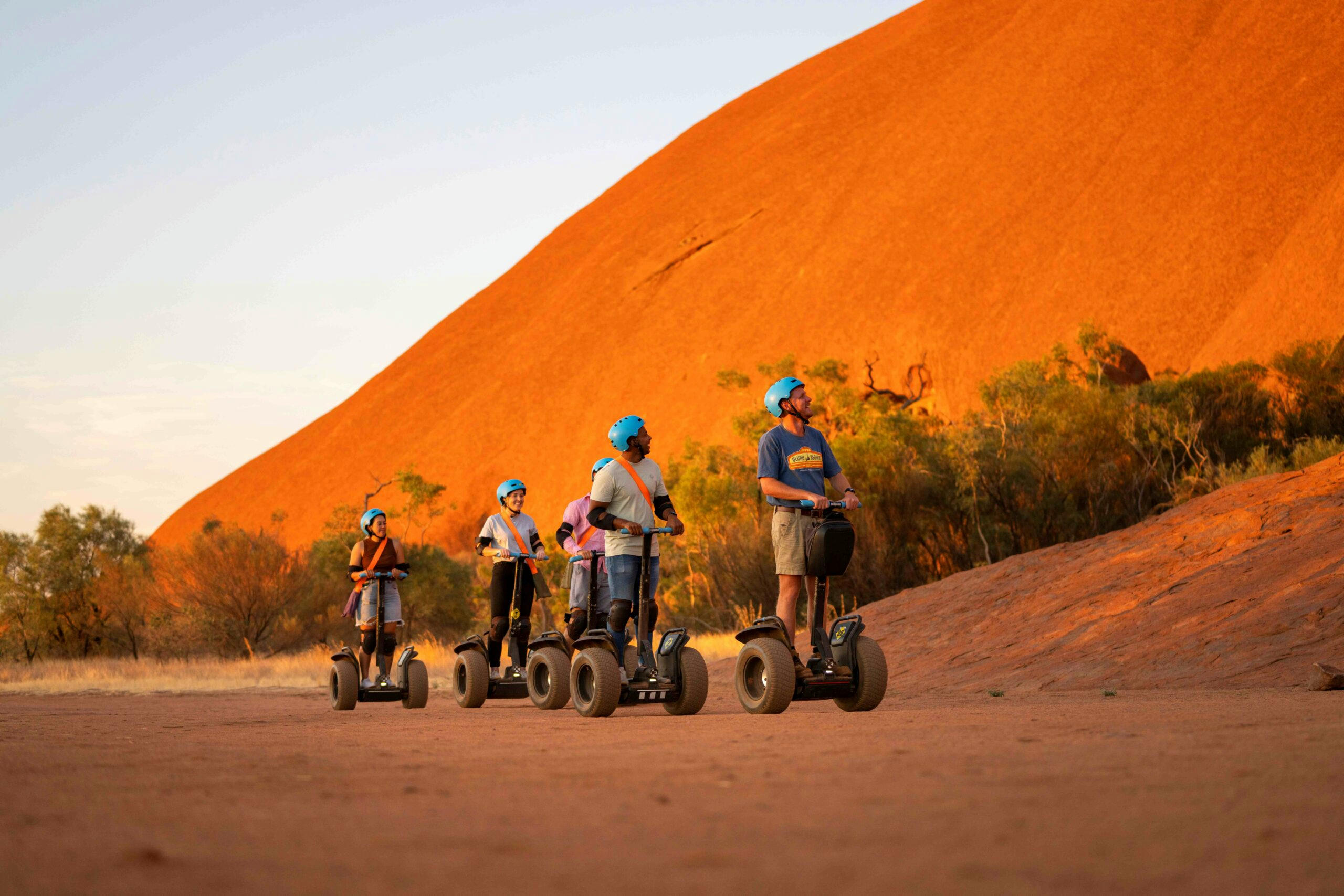

Tours include transfers from Voyages Ayers Rock Resort, safety training, and equipment. Private tours are available for groups of up to 10. A portion of every tour sold goes directly to the Mutitjulu community via the Central Lands Trust — it's one of the more meaningfully sustainable ways to experience the rock.
ℹ Good to know: Segway tours are recommended for those aged 12–55. Participants above 55 are welcome but should consider individual fitness. Not suitable for those above 65 or with a history of serious spinal, hip or knee injuries. Weight range 45–117 kg. Book ahead — tours fill quickly in peak season (April–October).
3. Let the Rock Explain Itself — Audio Guide
If you're exploring independently — on foot, by bike, or driving around the park — an audio guide transforms the experience. Uluru Audio Guide is GPS-triggered, meaning stories and facts play automatically as you reach each location. Over 150 stories cover the entire Uluru-Kata Tjuta National Park — cultural history, geology, wildlife, Anangu significance, and practical tips as you go.
It's available as a downloadable app ($19.99 at time of publishing) or a physical device hire from the Voyages Ayers Rock Resort Tourist Information Centre. Available in seven languages — English, French, German, Italian, Spanish, Japanese and Mandarin — making it particularly good for non-English speaking visitors who want to experience the park in depth without needing a guided tour. The device plays through headphones or directly through your car stereo, so it works equally well walking or driving.
4. Don't Overlook Kata Tjuta
About 50 km west of Uluru, Kata Tjuta (formerly known as The Olgas) is one of Australia's most underrated natural wonders — and that's saying something when it shares a national park with one of the world's most famous rocks. The 36 domed formations spread across 20 km, and the tallest rises over 500 metres — significantly higher than Uluru. The name means "many heads" in Pitjantjatjara, and the site holds equal spiritual significance to the Anangu people.
- Valley of the Winds (7.4 km circuit, up to 4 hours) — the more challenging walk, winding through the domes with epic lookouts. Parts of this walk are closed when temperatures rise above 36°C. Allow a full morning.
- Walpa Gorge Walk (2.6 km return, 1 hour) — shorter and easier, through a narrow gorge between towering sandstone walls. Dramatic and beautiful, especially in the morning.
📸 Photography note: Some areas of Kata Tjuta hold deep cultural significance to the Anangu. Certain spots are not to be photographed — follow the signage in the park out of respect for these traditions.
5. Stay for the Stars
The Red Centre is one of the least light-polluted regions in Australia, which means the night sky above Uluru is extraordinary. The Milky Way appears as a solid band, the Southern Cross is unmistakable, and on a clear moonless night the sky is alive in a way that most travellers have never experienced.

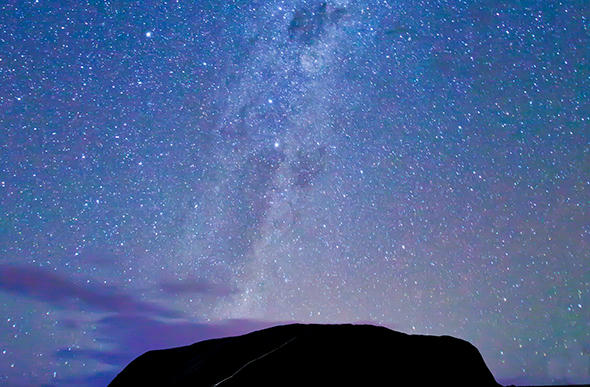
Milky Way over Uluru. Photo by Flight Centre
Uluru Astro Tours offer dedicated stargazing experiences with laser-guided constellation walks, telescopes powerful enough to see planetary detail, and guided explanations that weave Anangu astronomy — a sophisticated star knowledge developed over tens of thousands of years — alongside Western astronomy. Book independently or ask at the Ayers Rock Resort.
6. The Cultural Centre — Start Here, Not Last
Most people treat the Uluru-Kata Tjuta Cultural Centre as an afterthought if they visit at all. It should be your first stop. The centre explains the Tjukurpa — the Anangu law and creation stories that give every geological feature and walking track its meaning. It's run by the Anangu people, houses galleries of traditional art and craft, and puts everything else you'll see into context. Entry is included in your national park pass, and it's about a kilometre from the base of Uluru itself.
🗺 Getting there by road
Uluru is 462 km south-west of Alice Springs via the Stuart and Lasseter Highways — a straightforward and well-sealed drive of around 5 hours. The drive itself is part of the experience: the landscape changes dramatically as you move deeper into the Red Centre, and on a clear day you'll spot Uluru on the horizon well before you arrive. The national park entry pass is $38 per person (valid for 3 consecutive days).
Planning a Red Centre road trip?
Browse campervans and motorhomes departing Alice Springs and make Uluru the centrepiece of your Australian road trip. DriveNow receives no commission from the sightseeing products it recommends, we recommend them because we believe they are the quality that you can trust. Use our recommendations with confidence.
Search Campervans Alice SpringsCampervan Hire Guide BookWe acknowledge the Anangu people as the Traditional Custodians of Uluru-Kata Tjuta National Park, and pay our respects to Elders past and present. Uluru is a sacred site and should be visited with deep respect. Please follow all park guidelines, adhere to photography restrictions, and tread lightly on this extraordinary land. DriveNow encourages all travellers to explore Australia's sacred places responsibly and sustainably.